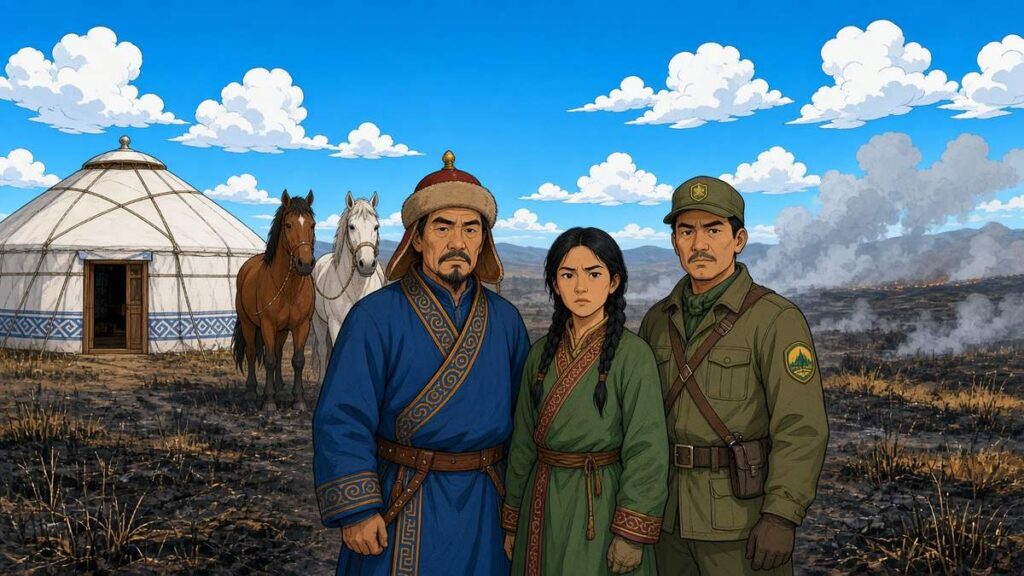
A US$928 Million Bill for the Steppe: Mongolia Prices the Numrug Wildfire
Six weeks after the flames went out, Mongolia has put a number on what it lost in the Numrug Strictly Protected Area: about 3.35 trillion tugriks, or roughly US$928 million. Environment and Climate Change Minister Tsend Sandag-Ochir presented the preliminary estimate to a cabinet meeting on Wednesday, and the figure is likely to shape a long argument over who pays for one of the worst ecological disasters in the country’s recent history.
Eight days of fire
The fire started on 8 October in Khalkh Gol district of Dornod province, in Mongolia’s far east near the Chinese border, and burned until 16 October. According to Mongolian reports, a vehicle in a convoy belonging to Mobicom, a mobile operator almost wholly owned by Japan’s KDDI, ignited dry grass while crossing the reserve. On 20 October KDDI acknowledged that the blaze was linked to its subsidiary’s activities, and three days later it published an apology and pledged to cooperate with investigators.
Satellite data presented by the minister show that 484,384 hectares were affected, of which 431,593 hectares, or 89 per cent, lay inside the protected area itself. Most of the damage was mild to moderate, but about 81,000 hectares suffered severe to extreme burning, and around 14,700 hectares of forest were hit. Riverbanks, meadows, forest-steppe and grassland all burned, degrading habitat in a reserve known for rare species such as the Ussuri moose, the black-billed capercaillie and the Far Eastern taimen.
How the number is built
The arithmetic matters for any future claim. Using standard methods, assessors put the direct environmental damage at 1.2 trillion tugriks. Mongolian rules, however, triple the value of damage inside strictly protected areas, which brings the total to about 3.35 trillion. The ministry also wants 83.9 billion tugriks to fund the years of monitoring and specialist studies needed to understand how the land recovers. Ecologists warn that native plant communities on cold, dry steppe can take decades to return, and that burned soil is more exposed to wind erosion and dust storms.
The minister stressed that the figure is not final. Police and judicial appraisers must review and verify it before a formal expert assessment is issued, and procedures to establish legal responsibility are under way.
A test for foreign investment rules
Beyond the courtroom, the case is a test of how Mongolia regulates foreign-owned companies operating in fragile areas, and of how Japan, one of its closest partners, handles a corporate liability that has become a public grievance. Critics in Ulaanbaatar have also asked why commercial vehicles were allowed into the core zone of a protected area during the peak autumn fire season at all.
How the bill is settled, by negotiation or by the courts, will set an important precedent. For the people of Dornod, the more pressing question is whether some of the money flows back into restoring the reserve they lost.