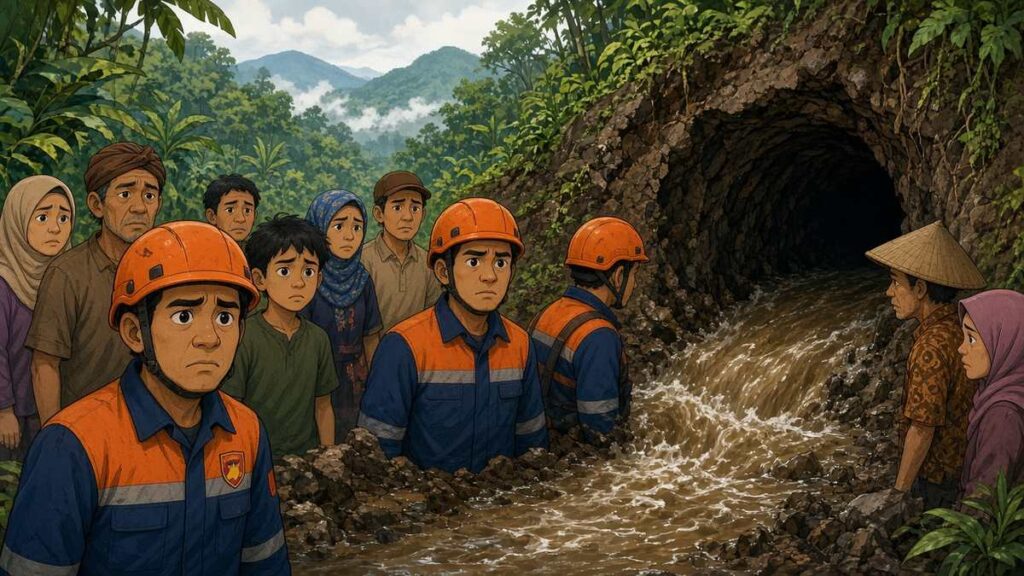
A River in the Shaft: The Deadly Flood at an Illegal Gold Mine in West Java
The rain began on Mount Butak in the early evening of Monday, 23 November. Around five hours later the Ciseureuh River broke its banks, and a torrent of water and mud poured into two hand-dug gold pits near the village of Bantar Karet in Nanggung, a hilly district of Bogor regency south of Jakarta. About 37 men were working underground. Eleven scrambled out. Twenty-six did not.
By Thursday morning, search teams had brought 13 bodies to the surface, and police forensic experts had identified six of them by matching records supplied by relatives. Thirteen miners were still missing, and hopes of finding anyone alive were fading.
A search in the dark
The shafts drop roughly 100 metres into unstable ground. Rescuers from the national search and rescue agency Basarnas, the regional disaster office, police, soldiers and the Indonesian Red Cross have been lowering themselves on ropes through openings barely wide enough for one person, working in muddy water with almost no light. Fresh landslides remain a threat while the rainy season continues, and the operation pauses whenever the weather turns.
West Java’s police chief has asked families not to dig or search on their own, however desperate they are. Investigators have set up a victim identification post and a counselling centre at the local police station where relatives can give information and receive psychological support.
Gold on someone else’s licence
The pits lie inside the Pongkor concession of the state miner Antam, one of Indonesia’s best-known gold areas. For decades, informal miners known locally as gurandil have tunnelled into the surrounding hills without permits, safety equipment or proper ventilation, selling small quantities of ore to local processors. The work is dangerous, but for families in poor upland villages it can pay far better than farming.
That economic pull is why such accidents repeat across the archipelago. Each disaster brings promises of crackdowns, and each crackdown pushes the work a little further out of sight without offering an alternative income. The Nanggung tragedy will test whether the authorities, and the companies holding the licences, can do more than close the holes once the bodies are recovered: register small miners, police the processing chain and give upland communities a safer way to make a living.
For now, though, the priority in Nanggung is simpler and sadder: bringing the remaining 13 men home to their families.