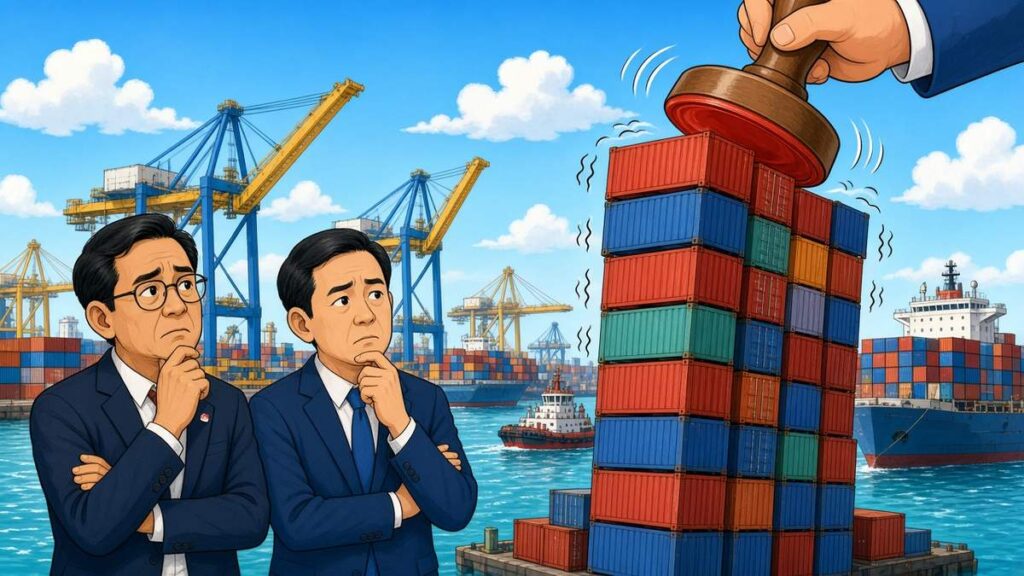
Twenty, Fifteen or Ten? Washington’s Overcapacity Tariffs Land on Singapore and Japan
Two of America’s most reliable economic partners in Asia woke up on Thursday to the same uncomfortable message from Washington: you make too much. The Office of the United States Trade Representative has proposed new tariffs on 14 trading partners that it accuses of “structural excess capacity”, and both Singapore and Japan are on the list. Their reactions were polite in tone and firm in substance, and they reveal how differently the two governments are placed to bargain.
What Washington is proposing
The proposal comes out of a Section 301 investigation that began in March. Under that trade law, the US can retaliate against foreign policies it judges unfair, and this time the charge is not dumping or currency games but industrial strategy itself. In the American reading, governments that subsidise factories, attract investment from “non-market economies” and keep domestic consumption low end up producing more than a normal market would, and the surplus spills into world trade.
For Singapore, the headline number is a tariff of up to 20 per cent on all goods, with some exemptions. The real increase would be smaller, because the figure is calculated net of Section 301 duties of 12.5 per cent that were already announced. The USTR also dangled a lower rate: 10 per cent if the city-state signs an Agreement on Reciprocal Trade or otherwise addresses the findings. Nothing is final yet. Written comments and requests to testify are due by 5 January 2027, hearings are scheduled for 25 January, and any duties would take effect in early 2027 at the earliest.
Singapore: the surplus that is not a surplus
A 168-page report lays out the case against Singapore. It names the Singapore Manufacturing 2030 plan and the RIE2030 research and innovation programme, financial support for electronics and semiconductors, health and petrochemicals, and a failure to curb investment from China that, in Washington’s view, lets Chinese firms route surplus output through the island.
The awkward detail is that Singapore buys more from the US than it sells there. The American goods surplus with Singapore was US$27 billion in 2024 and rose to US$33 billion in 2025. The report waves this away, arguing that a bilateral deficit does not outweigh the effects of an “outsized” manufacturing sector and low consumption at home.
The Ministry of Energy, Trade and Industry was unusually blunt in reply. Singapore “disagrees with the USTR’s findings” and is “very disappointed”, it said, insisting that its policies neither protect the home market nor subsidise production for export, and that its free trade agreements comply fully with World Trade Organization rules. It also promised to keep talking and to press Washington to reconsider or at least reduce the rate. For a small, open economy whose growth model depends on being a trusted manufacturing and logistics hub, being labelled a source of distortion is as worrying as the tariff itself.
Japan: protest, then patience
Tokyo’s position is stranger. The proposed rate for Japan is 15 per cent, with an option to go to 20 per cent, and both numbers match the deal the two countries struck last year, under which Japan promised a US$550 billion investment initiative in return for tariff relief. Most Japanese goods have actually faced 12.5 per cent since the US Supreme Court ruled against the earlier tariff wall in February, so the new proposal would restore the agreed level by another route.
Chief Cabinet Secretary Minoru Kihara still lodged a protest, saying Japan has no non-market policies and no structural overcapacity and calling the announcement regrettable. Yet his main message was continuity. Three rounds of projects worth about US$130 billion have already been announced under the investment scheme, and trade minister Ryosei Akazawa had said he expects no rise above 15 per cent as long as the money keeps flowing. Japan is protesting the label while quietly relying on the bargain.
Why it matters for the region
Taken together, the two cases show the new shape of US trade pressure in Asia. Tariffs are no longer tied mainly to trade balances; they are attached to the way partners run their economies. Countries with large investment commitments, like Japan, have a ready-made shield. Smaller economies such as Singapore have to argue on principle and hope the comment period changes minds. The next eight weeks of submissions and hearings will show whether “overcapacity” becomes the standard yardstick for every manufacturing nation in the region.