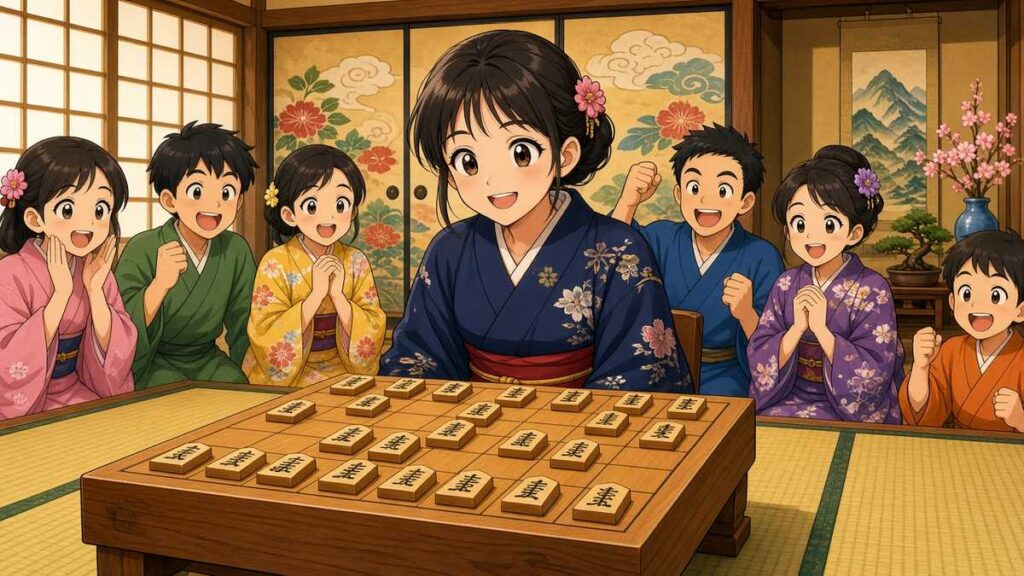
Ninety-Nine Squares, One Glass Ceiling: Tomoka Nishiyama Crosses Into Shogi’s Main Ranks
For as long as modern professional shogi has existed in Japan, there have been two worlds. One is the world of the kishi, the full professionals who compete for the game’s great titles and whose ranks have been entirely male. The other is the women’s professional circuit, with its own titles, its own champions and, until now, an invisible wall between the two. On Monday Tomoka Nishiyama announced that she will walk through that wall.
What actually changes
The 31-year-old, who already dominates the women’s game, said she will exercise her right to join the kishi system. She will start at yodan, the entry rank of the main professional ladder, on April 1. Her eligibility came from a fifth victory in the Hakurei title, one of the most prestigious crowns in women’s shogi, secured earlier this month. That route was designed for exactly this kind of sustained excellence, and she is the first to use it.
Being a kishi is not just a label. It means a place in the main tournament structure, games against the same opponents who fight for the Meijin and Ryuo titles, and a different level of public attention. It also means no more safety net of a separate category: every game from April onwards is played on the same scoreboard as everyone else.
A long road, not a lucky break
Nishiyama’s story is notable because it did not start with this rule. Years ago she climbed deep into the Shoreikai, the brutal apprentice league that feeds the professional ranks, and came close to promotion before it slipped away. She then rebuilt her career in the women’s circuit and collected titles at a pace few had seen. Her new status is less a reward than a recognition that the old pathways were too narrow for a player of her strength.
Shogi is a game of patience. A promoted piece can change the board, but only if it survives long enough to matter. The same will apply to her career. Entry-level professionals face a punishing schedule and opponents who have spent their entire lives in the main system. Few people expect instant titles. What matters is whether she can hold her ground and climb, game by game.
Why it matters beyond the board
Japan has spent years discussing how to bring more women into fields that remain overwhelmingly male, from boardrooms to parliament. A breakthrough in a centuries-old intellectual game may look small in comparison, but symbols travel. Young girls who play shogi at school clubs now have a living example that the top tier is not closed to them.
There is also a quieter lesson for the shogi world itself. The game has enjoyed a boom thanks to young stars and online streaming, and its audience has broadened. Opening the main ranks to a woman who earned it on merit strengthens that appeal rather than diluting it. On April 1 the board will look the same: nine by nine, forty pieces. The person sitting across from her opponents will make it look very different.