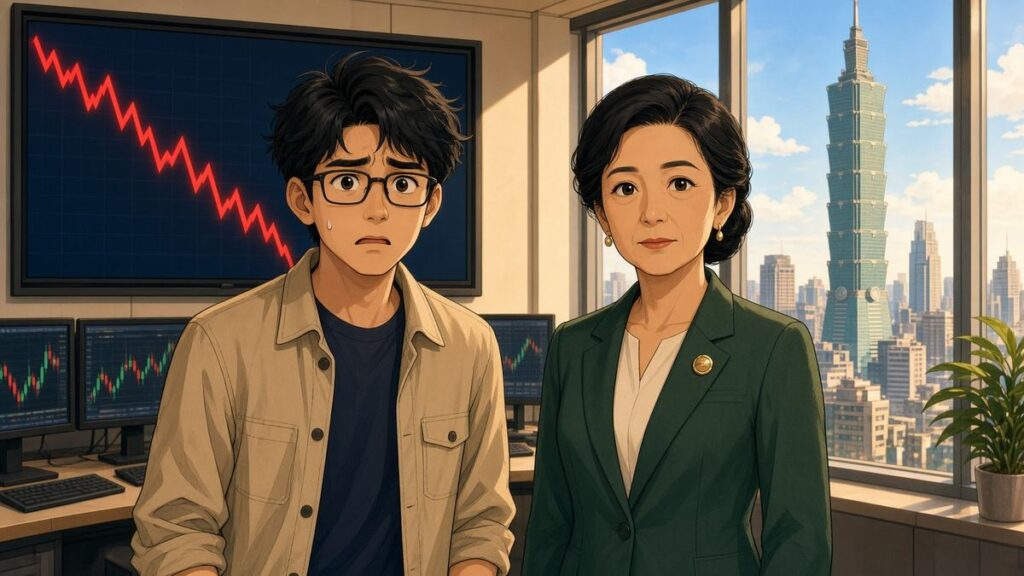
Taipei Pulls the Handbrake: Why Taiwan Banned Short Selling Below the Close After a 28% AI Slide
For most of the past two years, Taiwan’s stock market has been the purest bet on the artificial intelligence boom. When the world wanted more AI chips, servers and cooling systems, Taipei-listed companies built them, and the TAIEX rose accordingly. This autumn, the same concentration has worked in reverse.
By Friday’s close the index stood at 36,033.29, roughly 28 per cent below its October peak. Heavy selling in technology and AI names, led by the market’s giant, TSMC, dragged the whole board lower, and a sharp sell-off in US chip shares added pressure over the weekend.
Five measures in one evening
On Saturday the Financial Supervisory Commission announced a package that takes effect on Monday, 23 November. The centrepiece is a blanket ban on short selling below the previous day’s closing price. Investors may still borrow and sell shares, but not at a price lower than the last close, which removes one of the mechanisms that can turn a fall into a cascade. Brokers and futures firms keep an exemption for genuine hedging.
The regulator also raised the minimum margin for short sales from 130 to 150 per cent, stopped accepting applications for new put warrants, and urged listed companies to buy back their own shares, sweetening the request by counting buybacks completed by the first quarter of 2027 towards their ESG ratings. Lenders such as financial institutions were encouraged to pause lending out stock. Separately, the National Financial Stabilization Fund is already buying shares.
Does it work?
Short-selling bans have a mixed record. They can calm panic for a few days and stop aggressive bets against individual companies, but research on earlier crises suggests they also reduce liquidity and can make price discovery slower. The FSC has not set an end date and says it will adjust the rules as conditions change, which leaves room to unwind them quickly once trading stabilises.
The deeper issue is that no regulation in Taipei can decide how much the world will spend on AI next year. Taiwan’s export economy is tied to the investment plans of a small group of global technology companies. If those plans hold, the slide will look like a painful correction in a long boom. If they shrink, the handbrake will only slow the descent.
For ordinary investors, many of whom piled into chip stocks during the rally, the message from the authorities is simple: stay calm, the state is watching. Whether markets believe it will become clear when trading opens on Monday.