126 Down, 489 to Go: The Slow, Millimetre-Precise Work of Emptying Fukushima’s Reactor 2 Fuel Pool
More than fifteen years after the earthquake and tsunami of March 2011, one of the most delicate chores at the wrecked Fukushima Daiichi nuclear plant is advancing one fuel assembly at a time. Workers emptying the spent fuel pool of the No. 2 reactor building say the job is going smoothly, and the numbers explain why patience is the main tool on site.
The pool holds 615 fuel assemblies, including some that were never used. Since Tokyo Electric Power Company began lifting them out in June, 126 have been removed. Each one takes under an hour.
A building that survived, and a problem that did not go away
Reactor 2 occupies a peculiar place in the Fukushima story. Unlike units 1 and 3, it did not suffer a hydrogen explosion, so the building around it remained structurally intact. That sounds like good news, and partly it is. But the intact shell also trapped high radiation around the fuel pool, making it far too dangerous for people to work there by hand.
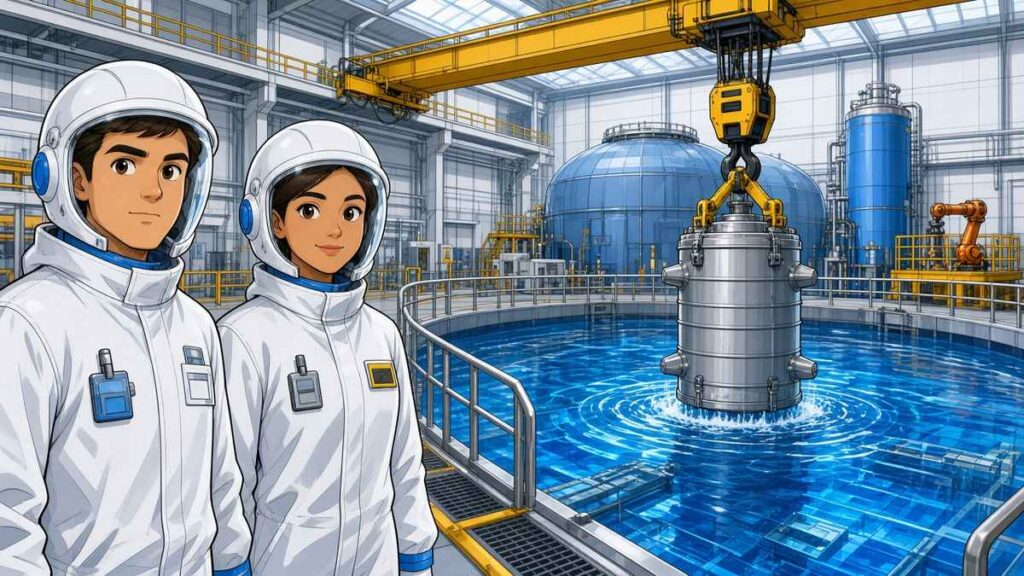
The solution was to cut an opening in the reactor building’s wall and bring in remote-controlled equipment made up of three cranes. Operators sitting in a separate control room guide the arms to lift each assembly from the pool and place it in a heavy container called a cask, which is then carried out through the opening and transferred to a common storage pool elsewhere on the site.
Practice with fakes, precision with the real thing
The crews rehearsed extensively with mock assemblies built to match the real ones in shape and weight. Crane arm lengths are adjusted by just a few millimetres at a time. Those who load the casks say that repetition is what lets them work safely now.
The operation is currently paused. Since October 19, work has stopped for equipment inspections and to free up room in the common storage pool. Tepco expects to resume around next spring and aims to finish emptying the pool by the end of fiscal 2028.
Why it matters beyond the plant fence
For residents of Fukushima Prefecture, each removed assembly is a small reduction in risk: fuel sitting in an elevated pool inside a damaged plant is exposed to future earthquakes. Getting it into sturdier storage is a precondition for the far harder task still ahead, retrieving the melted fuel debris from the reactors themselves.
The steady pace at Reactor 2 does not shorten the decades-long decommissioning timeline. What it does offer is a quieter kind of progress, measured not in headlines but in casks, and in the confidence of crews who have learned to move dangerous material without hurrying.